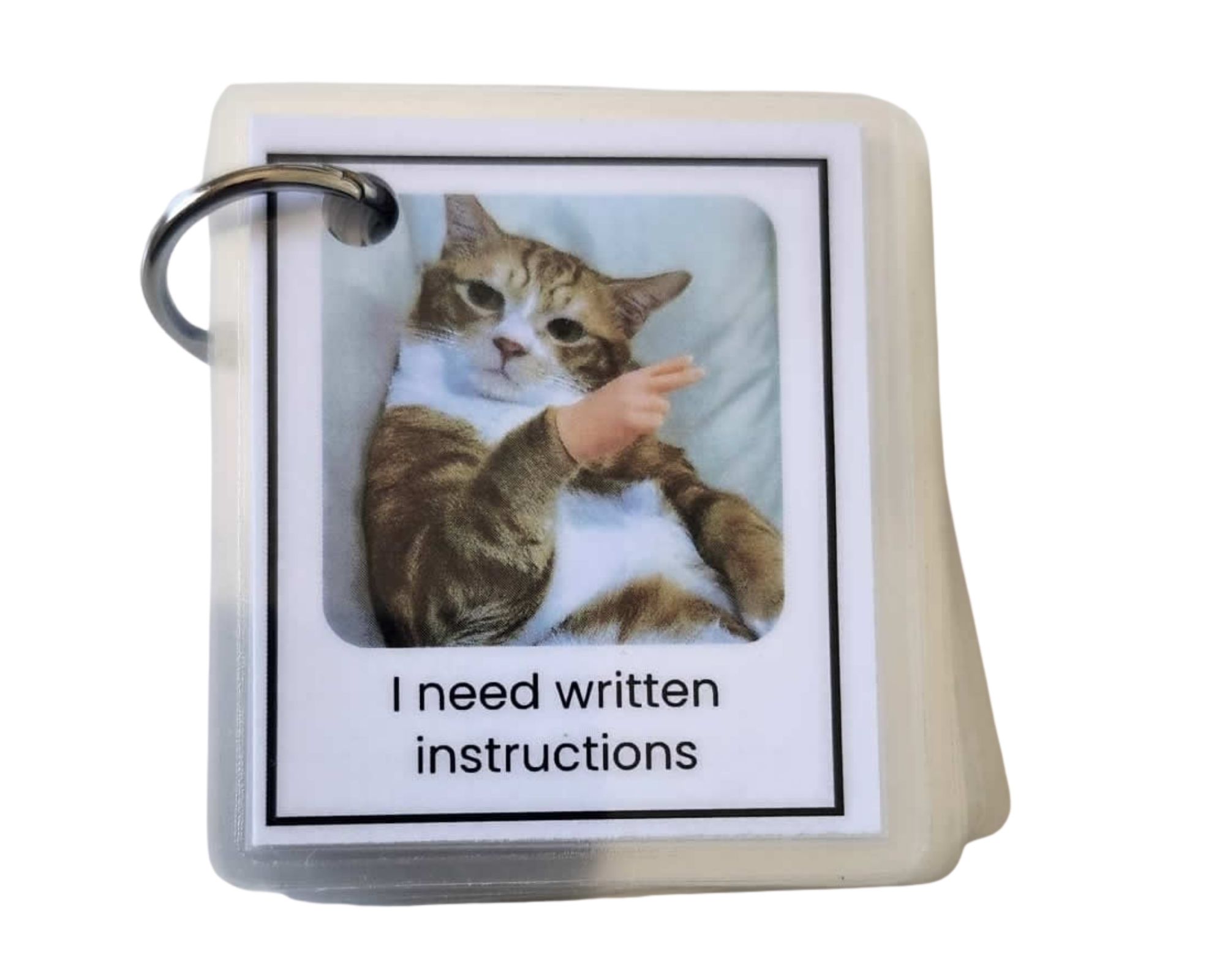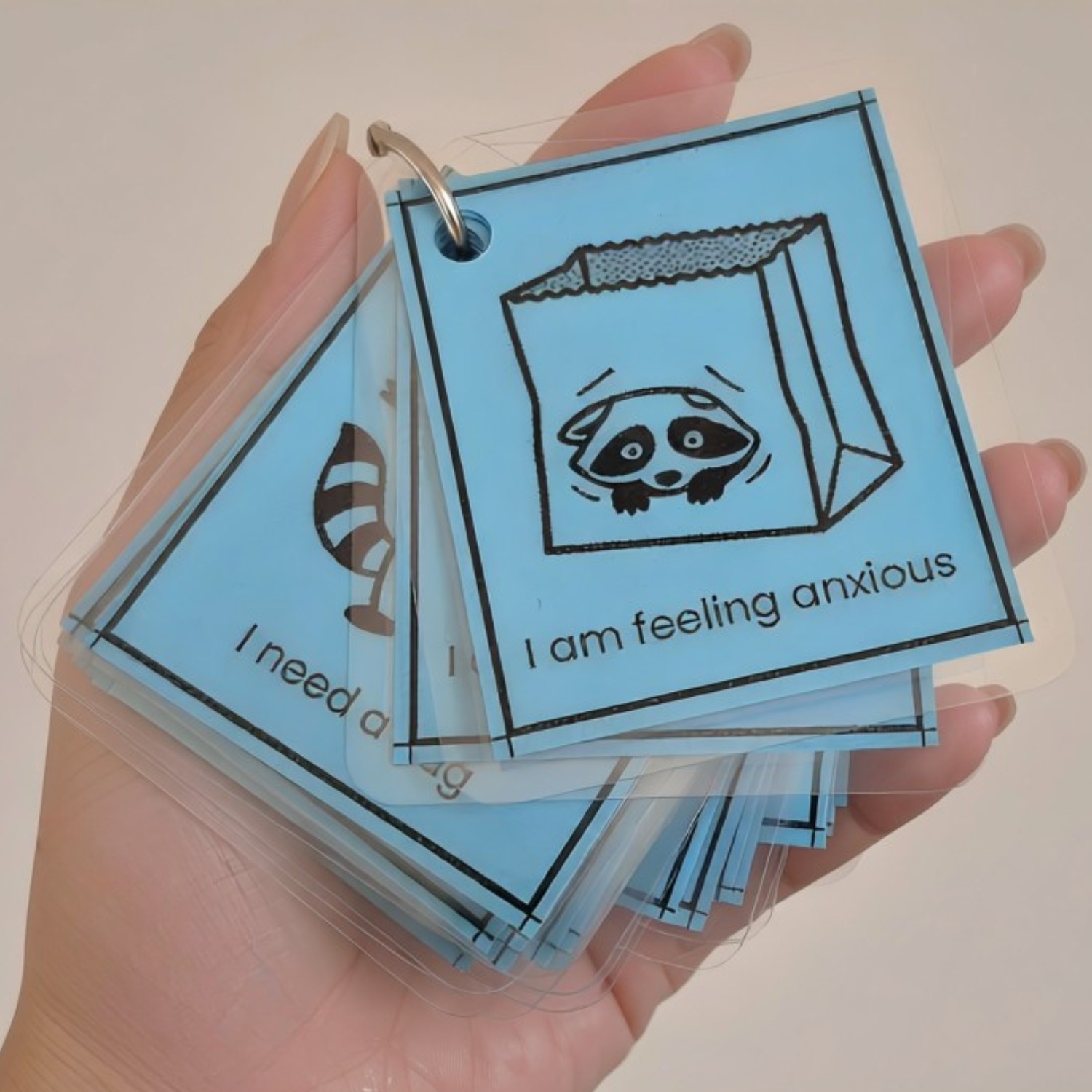










Beyond the To-Do List: 5 Realistic Executive Functioning Strategies for Adults with ADHD
For adults navigating ADHD and learning differences, the advice to “just use a planner” or “write a to-do list” can feel incredibly frustrating. Executive functioning – the brain’s ability to manage time, prioritize tasks, focus, and switch between activities – does not operate on standard organizational rules when neurodiversity is in the mix.When a lack of dopamine stalls your motivation, a massive project can feel entirely paralyzing. Rather than forcing your brain to fit into a neurotypical mold, the key to consistency is building systems that work with your cognitive patterns. Here are five realistic, actionable executive functioning strategies designed specifically for the adult ADHD brain.
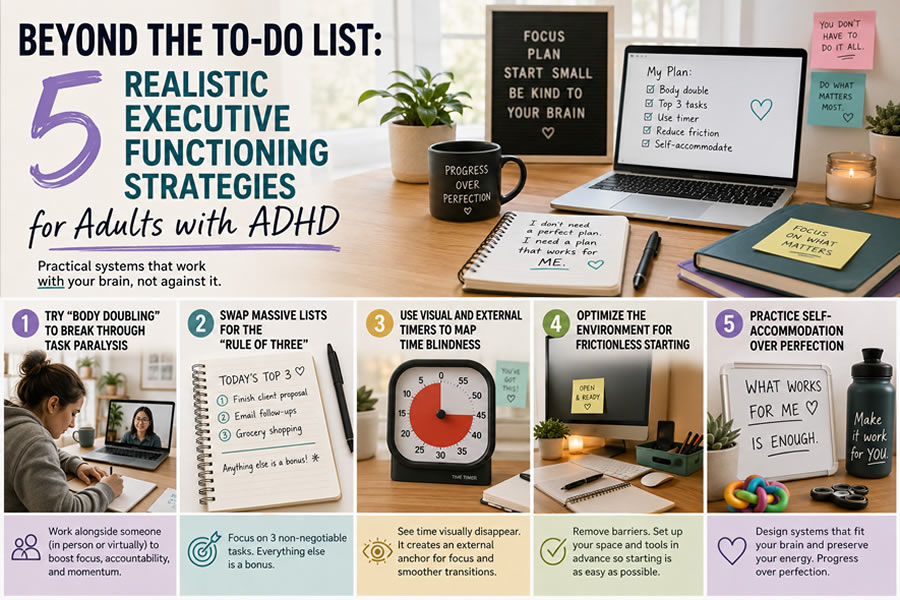
1. Try “Body Doubling” to Break Through Task Paralysis
Task paralysis occurs when your brain feels overwhelmed by the sheer number of steps required to start a project, leaving you stuck in a loop of avoidance and shame. One of the most effective tools to bypass this hurdle is body doubling.
Body doubling simply means working on a task alongside another person. Having someone else in the room (or even on a virtual call) who is also quietly working creates a subtle, supportive undercurrent of accountability. It grounds your focus, lowers the activation energy required to start, and makes mundane tasks like administrative work or organizing feel significantly less draining.
2. Swap Massive Lists for the “Rule of Three”
Looking at a long, exhaustive list of demands can instantly trigger an executive functioning shutdown. To protect your working memory from burning out, practice narrowing your daily focus down to just three core objectives.
Pick three non-negotiable tasks for the day. Anything else you accomplish beyond those three is an absolute bonus. By scaling back your immediate view, you give your brain a realistic finish line, reduce anticipatory anxiety, and build positive momentum rather than a sense of perpetual backlog.
3. Use Visual and External Timers to Map Time Blindness
Time blindness makes it incredibly difficult to gauge how long an activity will take or how fast time is actually slipping by. Relying purely on internal perception often leads to intense hyperfocus or severe chronic lateness.
Instead of digital clocks that show static numbers, use a visual countdown timer (like a physical Time Timer) where a colored disc disappears as the minutes tick away. Seeing time physically diminish translates an abstract concept into tangible, visual data. This external anchor makes transitions smoother and helps your brain register the pacing of your day naturally.
4. Optimize the Environment for Frictionless Starting
If an item or tool is hidden behind a closed door or deep inside a drawer, it often completely ceases to exist in the ADHD working memory. This “out of sight, out of mind” phenomenon means that any physical barrier can prevent you from starting a necessary task.
To combat this, set up your spaces for frictionless starting. If you need to complete financial bookkeeping or write content, leave the required tabs open on your desktop or place your materials out on your desk the night before. By removing the initial setup steps, you lower the mental friction needed to jump into motion.
5. Practice Self-Accommodation Over Perfection
Many adults with ADHD spend massive amounts of energy trying to perform tasks the “correct” way, leading to rapid burnout. Embracing self-accommodation means designing unique shortcuts that preserve your mental energy.
If organizing files by intricate categories fails, switch to a simple master-search system. If sitting still at a desk kills your focus, use a standing layout or transition your work to a different room. Focus entirely on the progress and utility of your system rather than trying to force perfection.